1942
Seattle
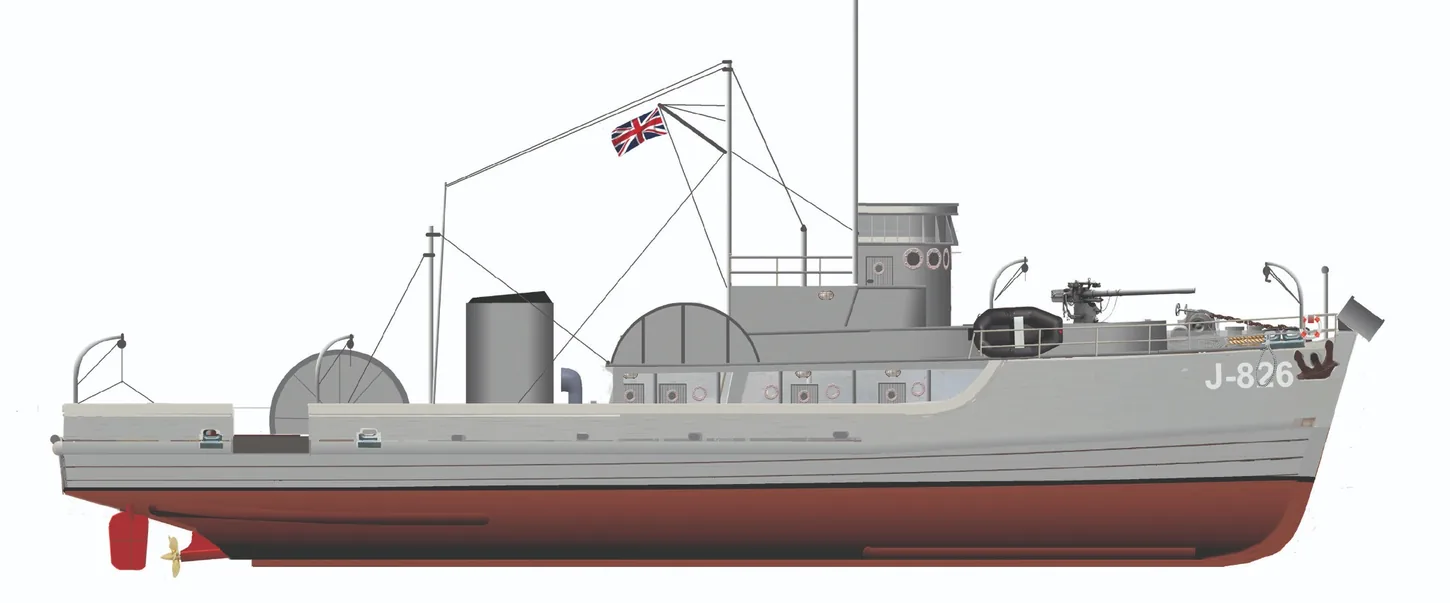
Royal Navy
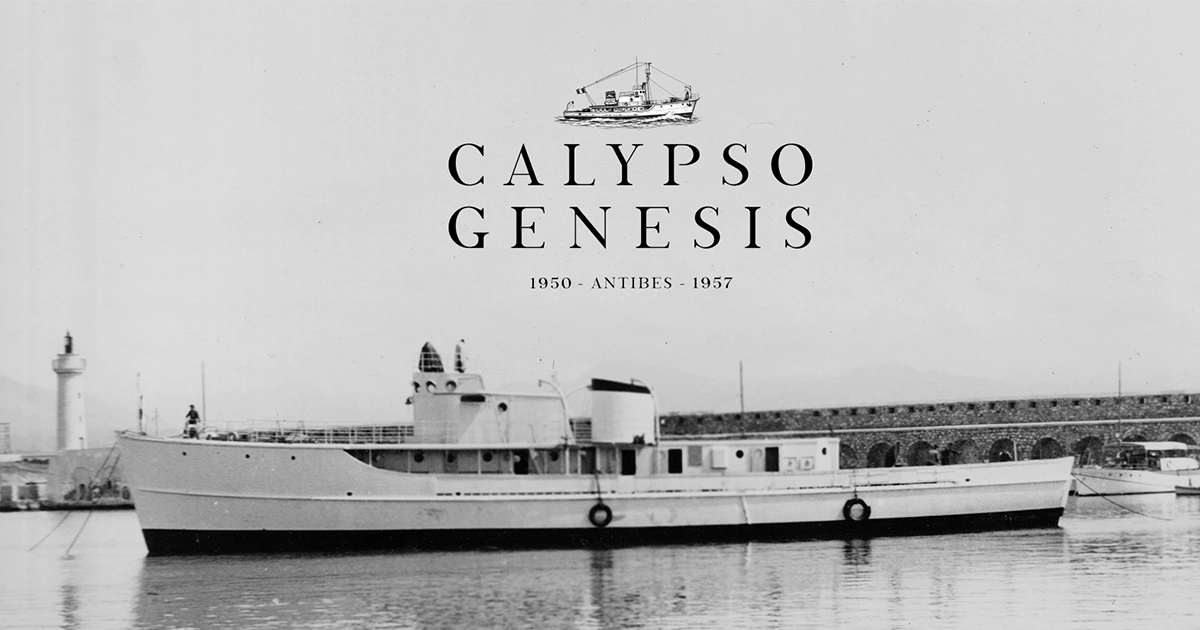
ANTIBES / 1950 — 1957
The formative years of Calypso, brought to life through previously unpublished photographs and the journals of Frédéric Dumas. A human adventure that began at Port Vauban.
CALYPSO GENESIS
In 1950, a former warship begins its transformation into a universal symbol of curiosity, science and freedom.Calypso Genesis returns to the place where it all begins.
A PROJECT BY STÉPHANE GAMELIN & JOHANN NALDI01 / THE STORY
Before the famous films and expeditions, the Calypso was a vessel waiting to be transformed. Antibes became the workshop for that vision.
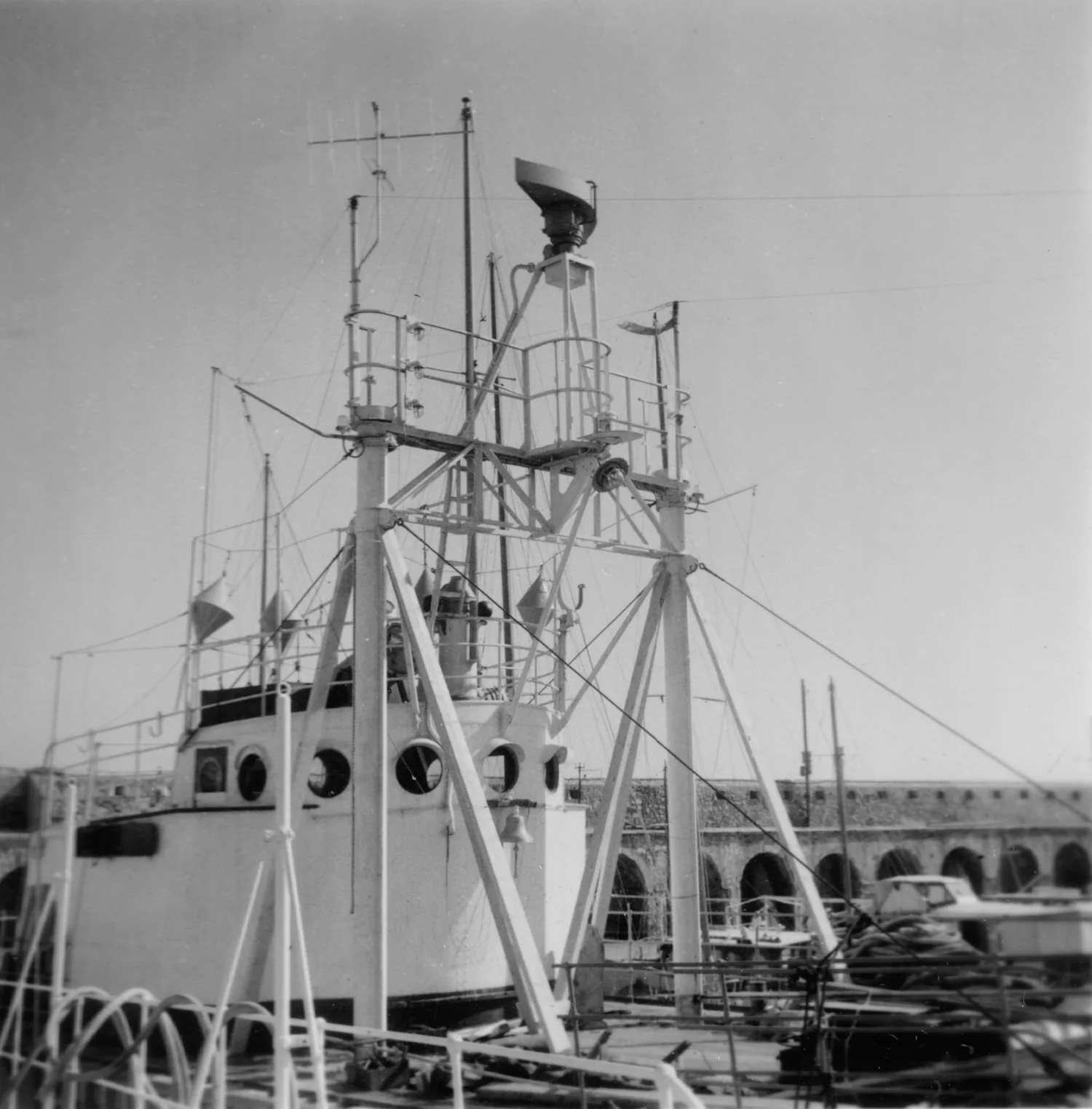 In Antibes, the Calypso gradually took shape as an oceanographic exploration vessel.
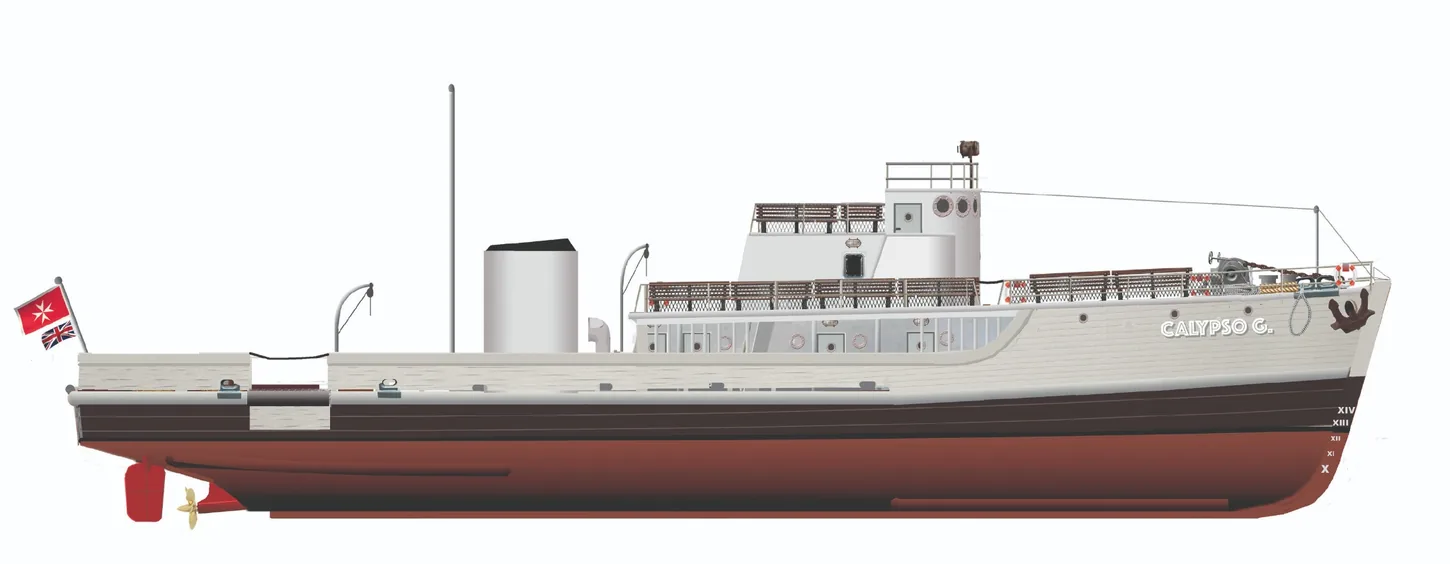
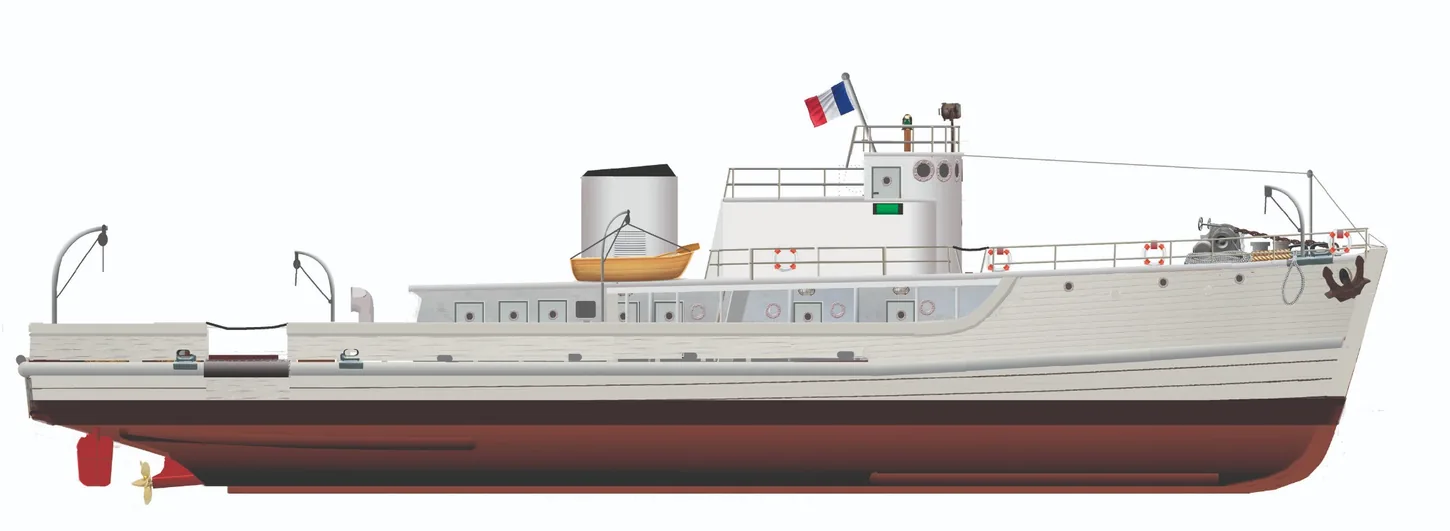
The story begins in Seattle in 1941–1942, where a wooden minesweeper is built for the Royal Navy. In August 1944, under the British flag, the vessel takes part in mine-clearing operations linked to the Allied landings in Provence. After the war, converted into a civilian ferry, it serves the Malta–Gozo route. In 1950, Thomas Loel Guinness makes it available to Jacques-Yves Cousteau, who envisions a ship bringing together divers, scientists and filmmakers.
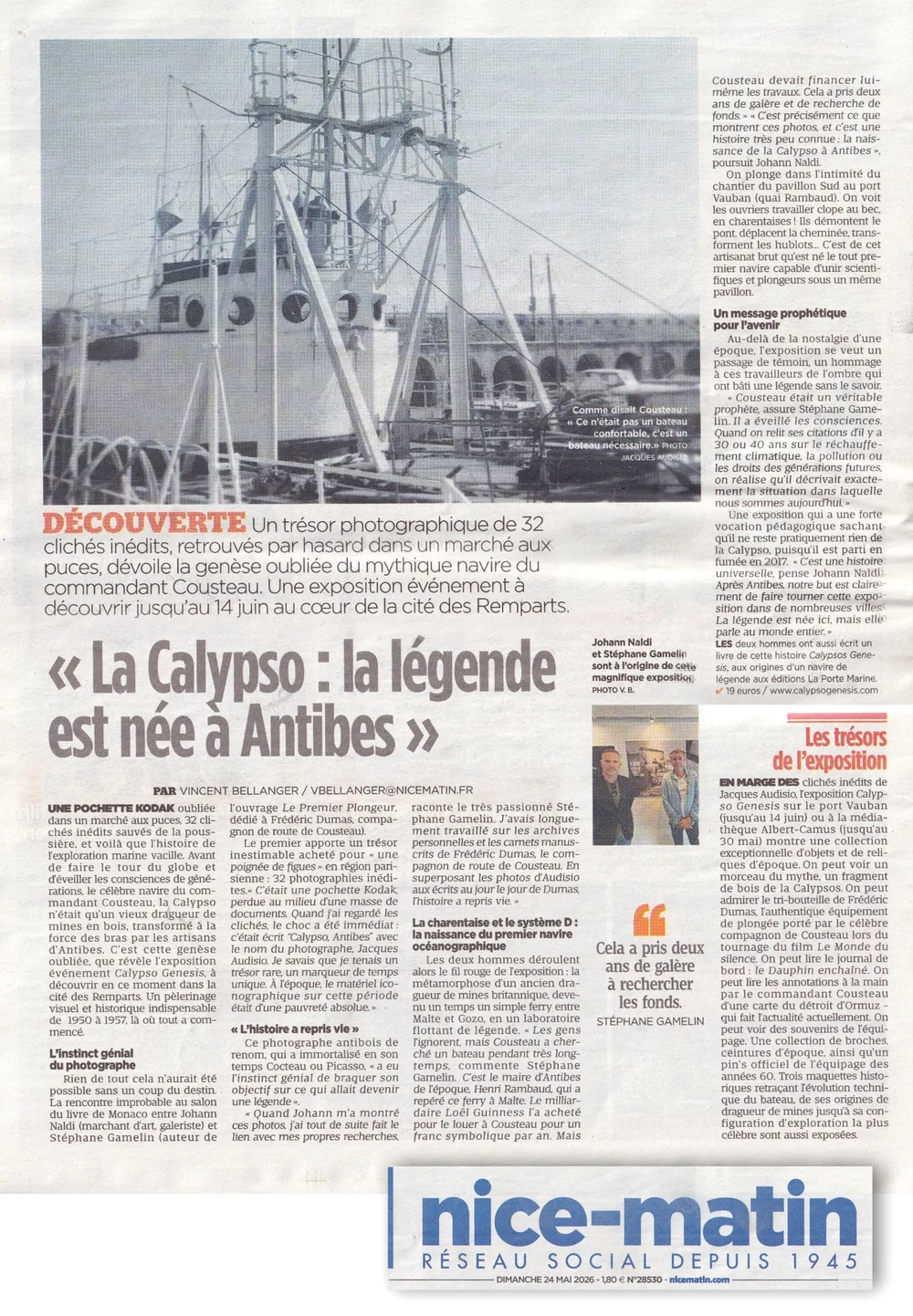
At Port Vauban in Antibes, the transformation begins. Under the technical direction of engineer Henri Rambaud, shipwrights, mechanics and sailors turn the former warship into a base for underwater research and filmmaking.
Frédéric Dumas brings irreplaceable first-hand knowledge. A pioneer of scuba diving and a close companion of Cousteau and Philippe Tailliez in the French Underwater Research Group, he understands the challenges of working underwater. His experience of diving equipment, safety, launching procedures and team operations helps shape the ship's layout. He contributes as both an expert practitioner and a designer, not simply as a crew member.
Calypso sets out on her first missions in the Mediterranean and Red Sea, and later the Persian Gulf. In 1956, The Silent World wins the Palme d’Or at Cannes. In 1957, the ship returns to Antibes for further work. Her extraordinary history continues across the world’s oceans — and, ultimately, through the ordeals of her final years.
KEY DATES
Royal Navy
Civilian ferry
At Port Vauban
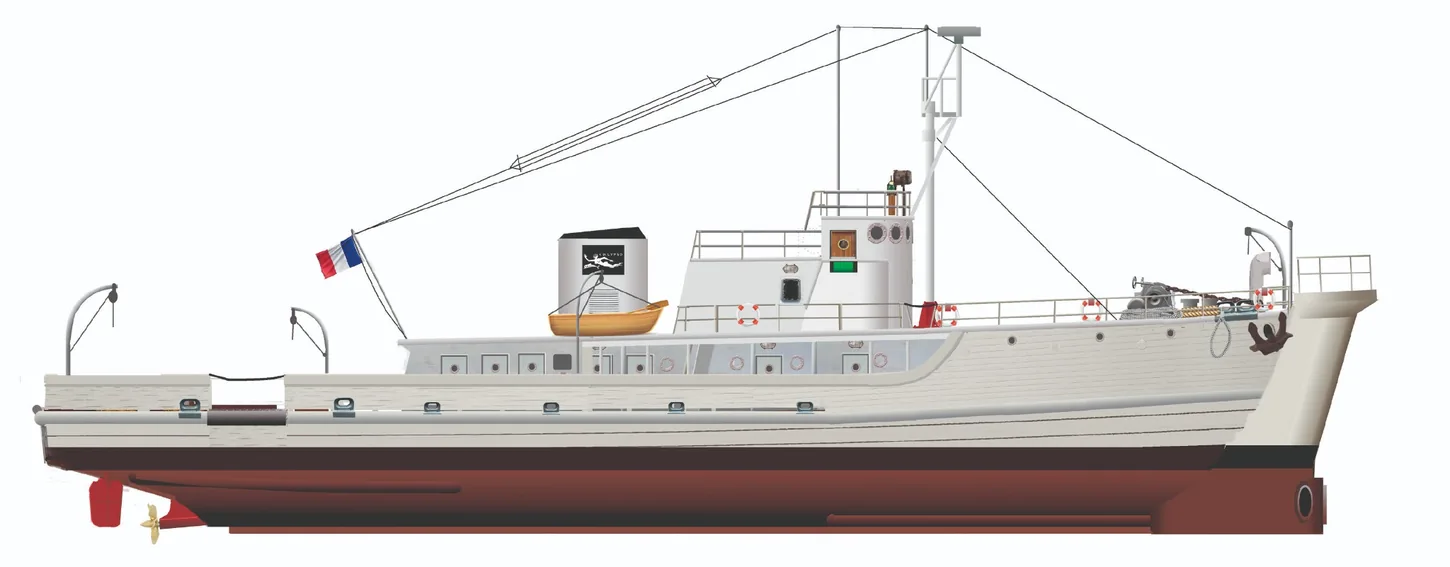
Research vessel
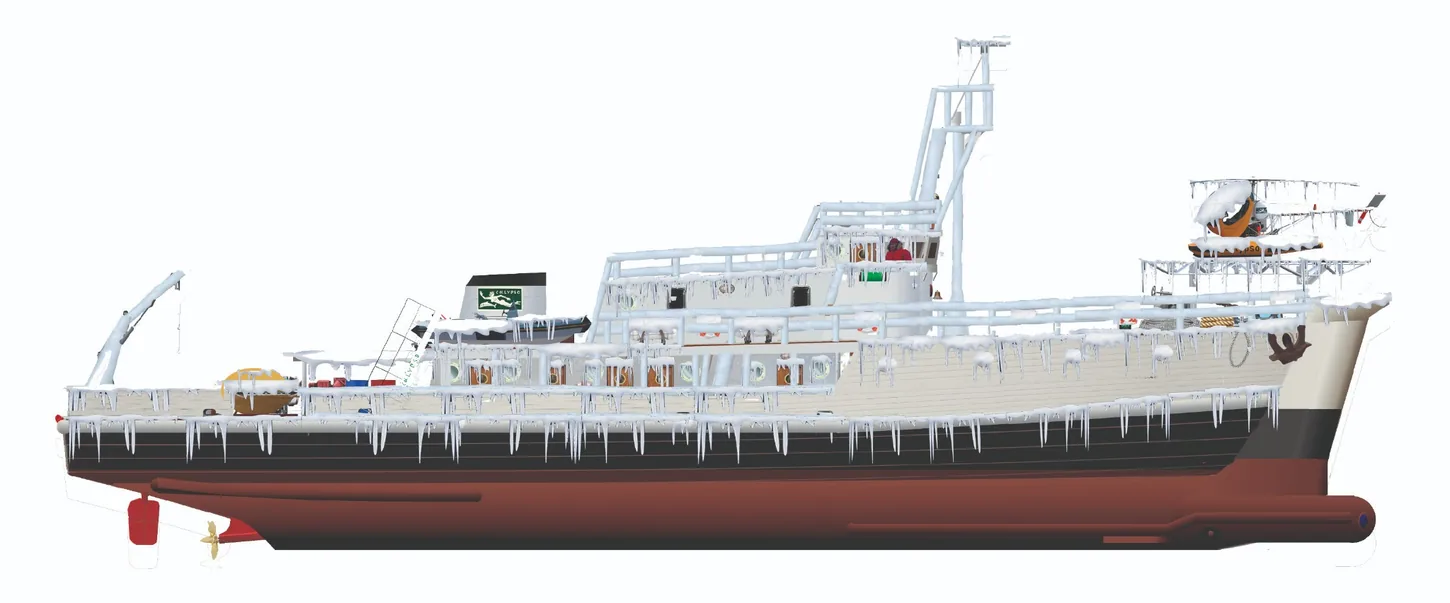
Polar expeditions
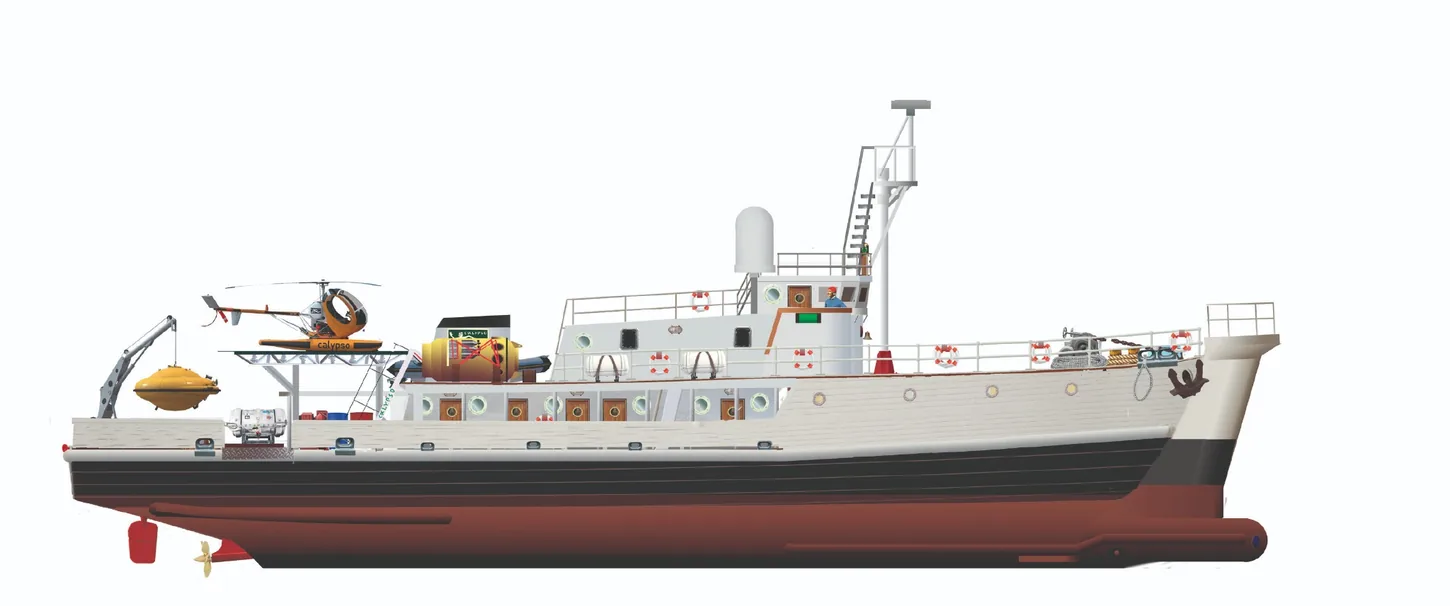
Worldwide fame
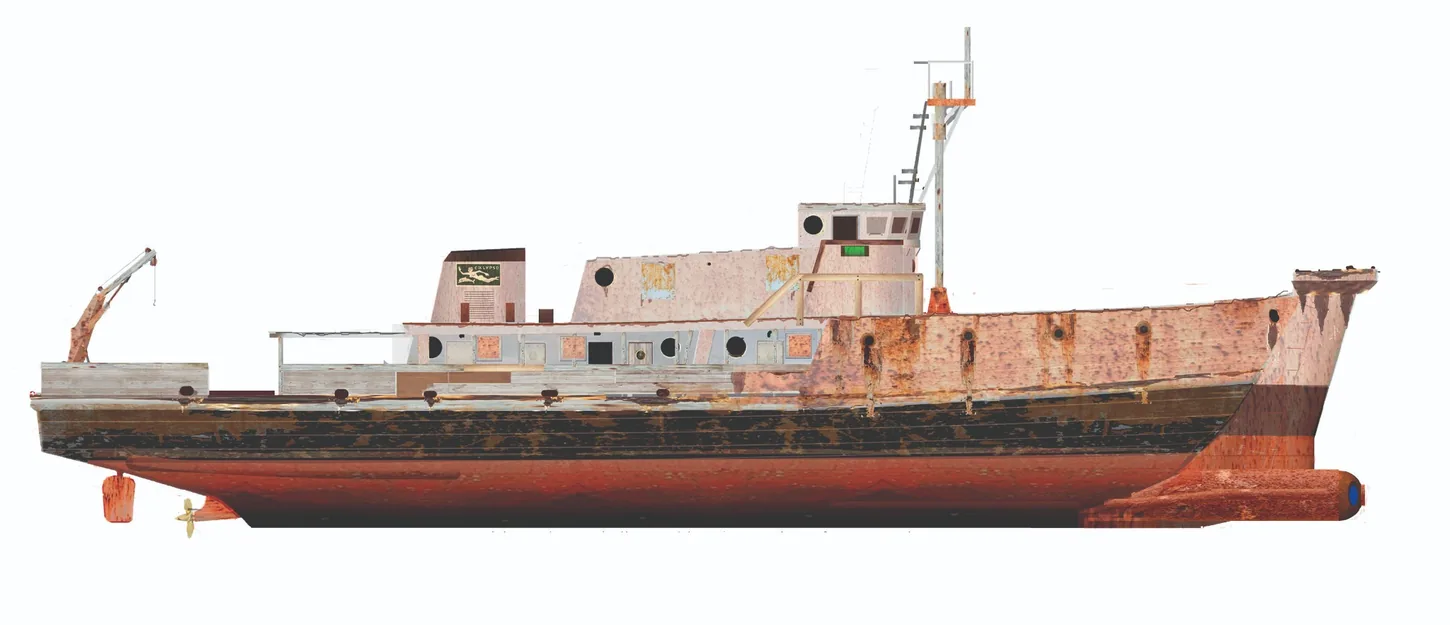
The laid-up ship
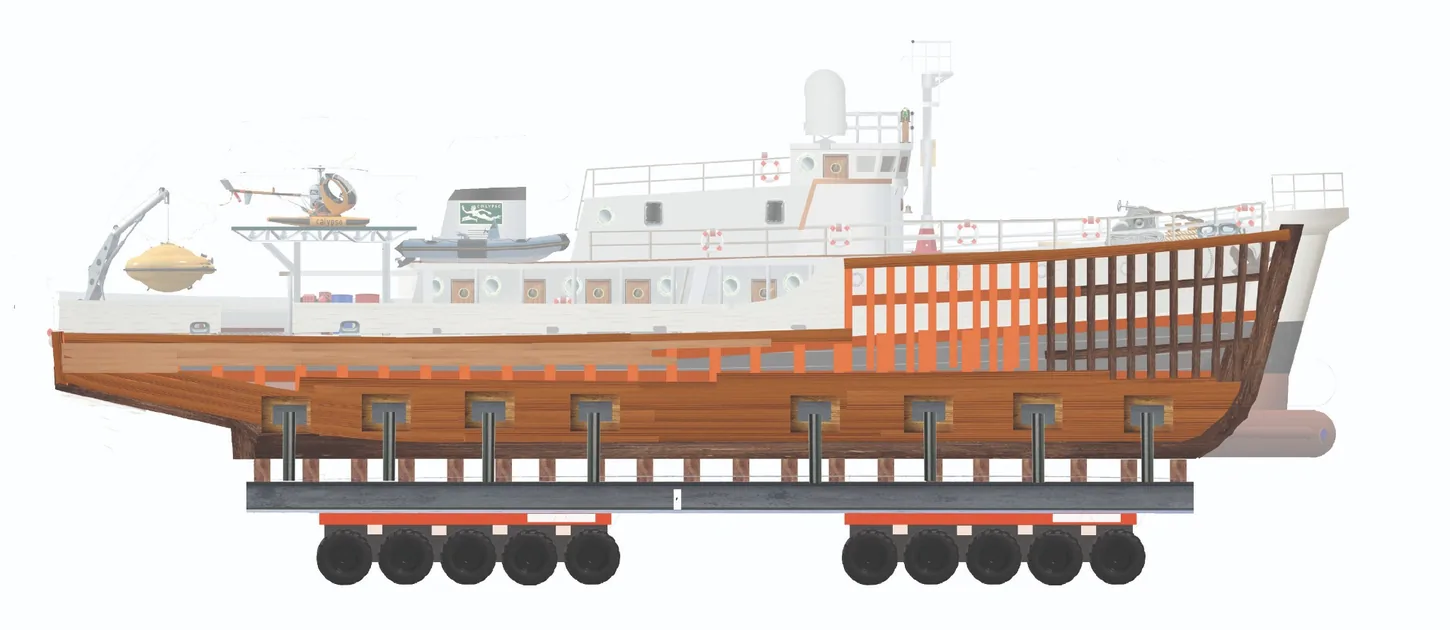
The final shipyard
Illustrations: Toño Gómez Lorente · Disnaval. Evolution of the vessel, 1942–2016. 
KEY DATES
02 / THE ARCHIVES
Together, the photographs and written journals bring back to life the early years of the Calypso, before worldwide fame.
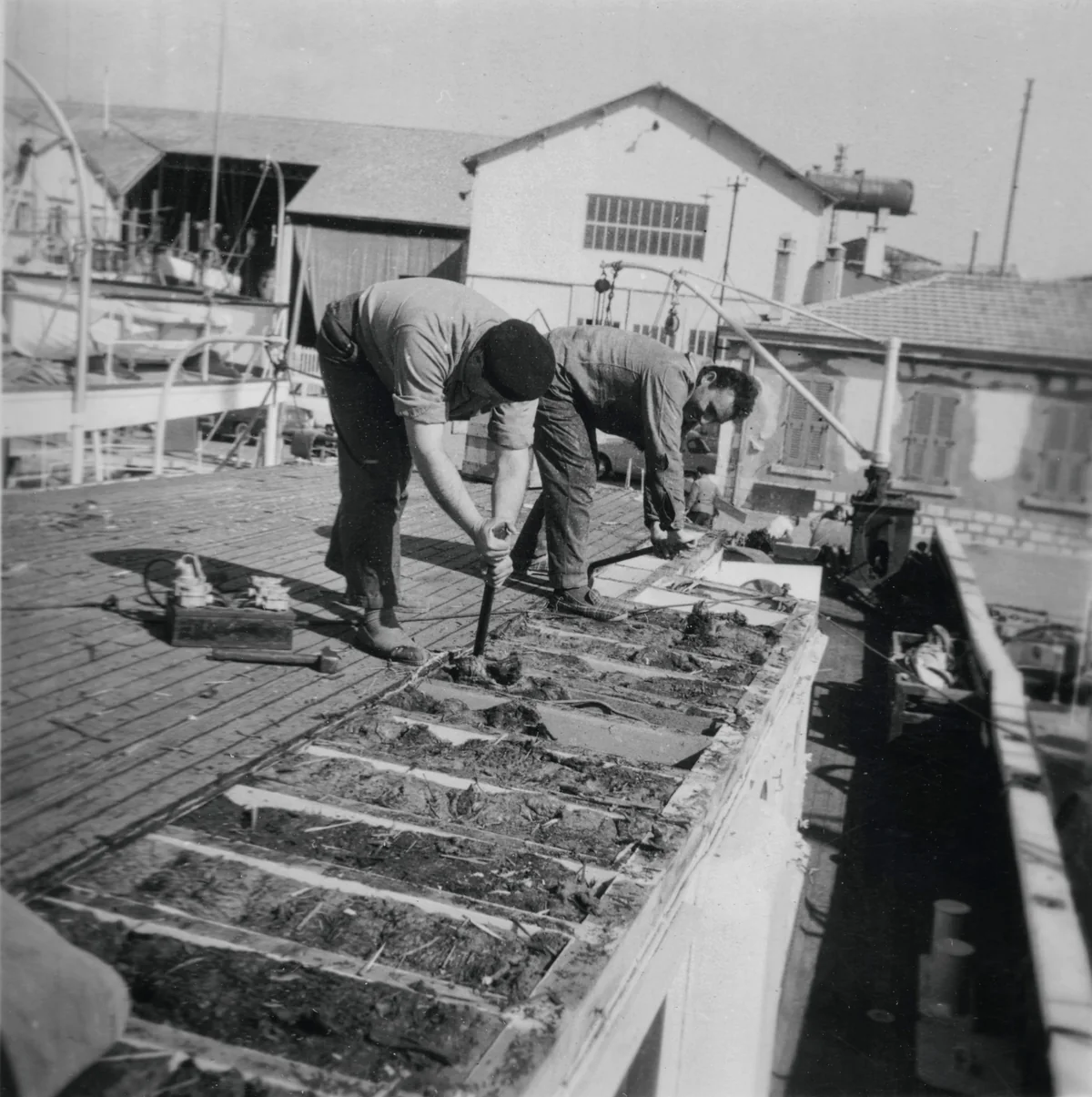
At a flea market, Johann Naldi discovers a group of thirty-two historical photographs documenting work on Calypso in Antibes. They reveal the craftsmen, their techniques and the shipyard’s transformation.
The Kodak envelope associated with the photographs bears the name of Jacques Audisio, an Antibes photographer based at 18 rue Vauban. This provides a plausible lead as to who witnessed the work.
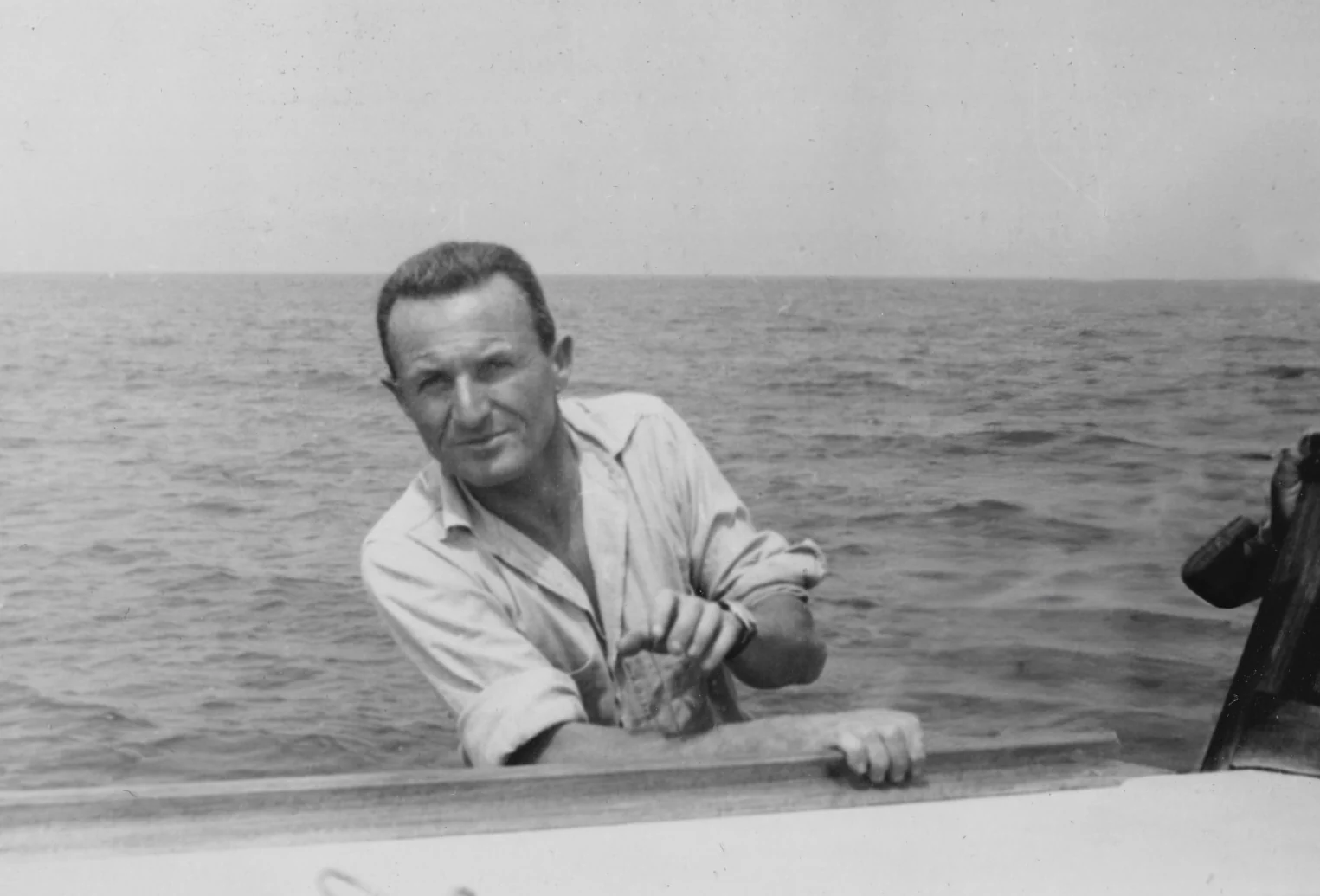
Preserved among Dumas’s papers, these journals describe the preparations, the men involved and the first adventures of the ship. His words give a voice to the rediscovered images.
These notes record technical decisions as well as the everyday life of the men aboard. Their accuracy and spontaneity revive the atmosphere of an adventure that is still taking shape.
The Calypso did not simply explore the oceans — it raised awareness.
— Jean Leonetti, Mayor of Antibes Juan-les-Pins · Foreword to Calypso Genesis
03 / EXHIBITION
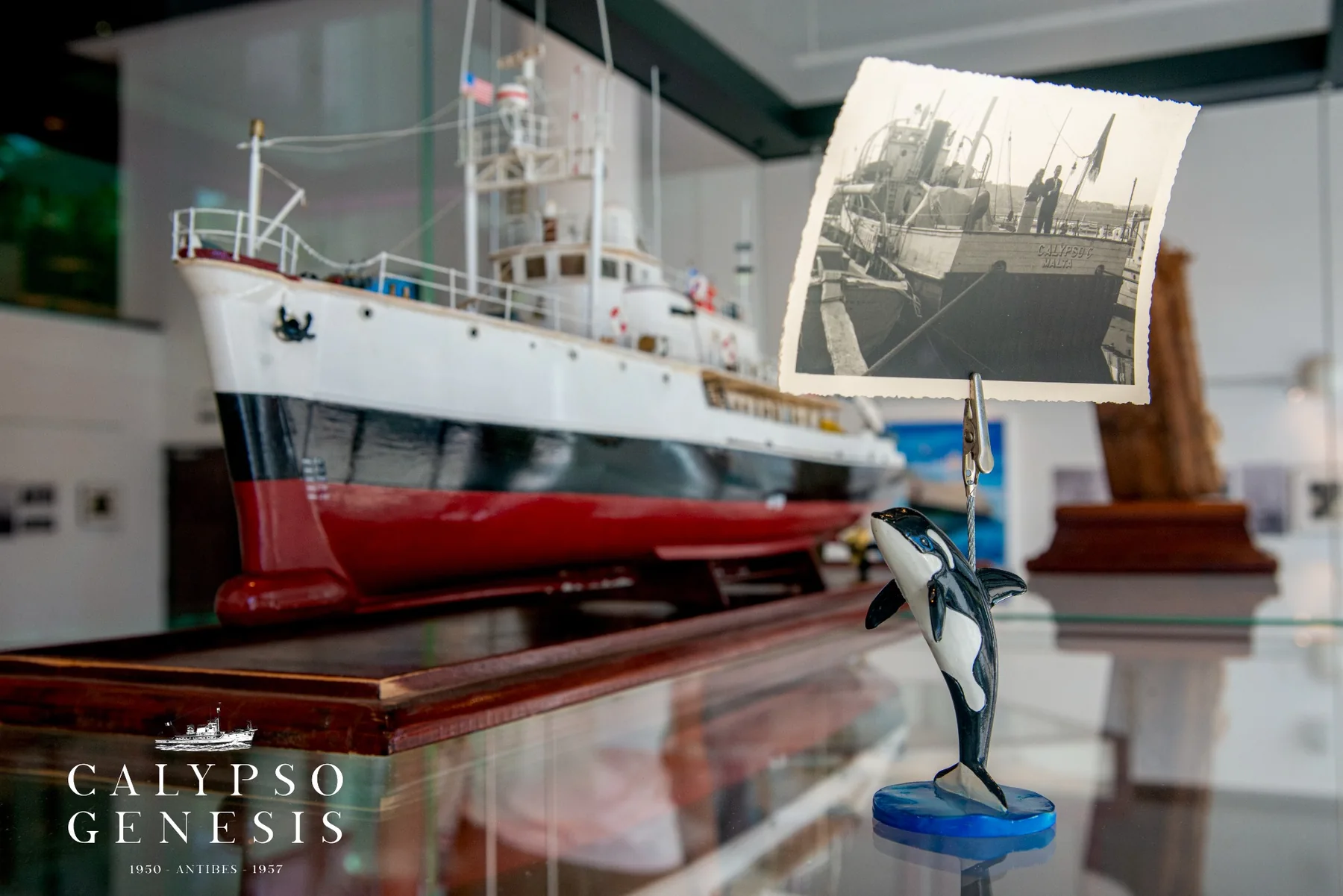
A SHARED HERITAGE
At the Albert-Camus Media Library and Port Vauban, historic photographs, Frédéric Dumas’s handwritten journals and original documents bring to life the people, the work and the places where the Calypso takes shape.
Toño Gómez’s drawings of the vessel, scale models, original collectors’ items, thematic artworks by Stéphane Gamelin and a relic — a piece of wood from the hull of Calypso complete the exhibition.
An exhibition that revisits the origins of a legendary ship and shares its heritage across generations.
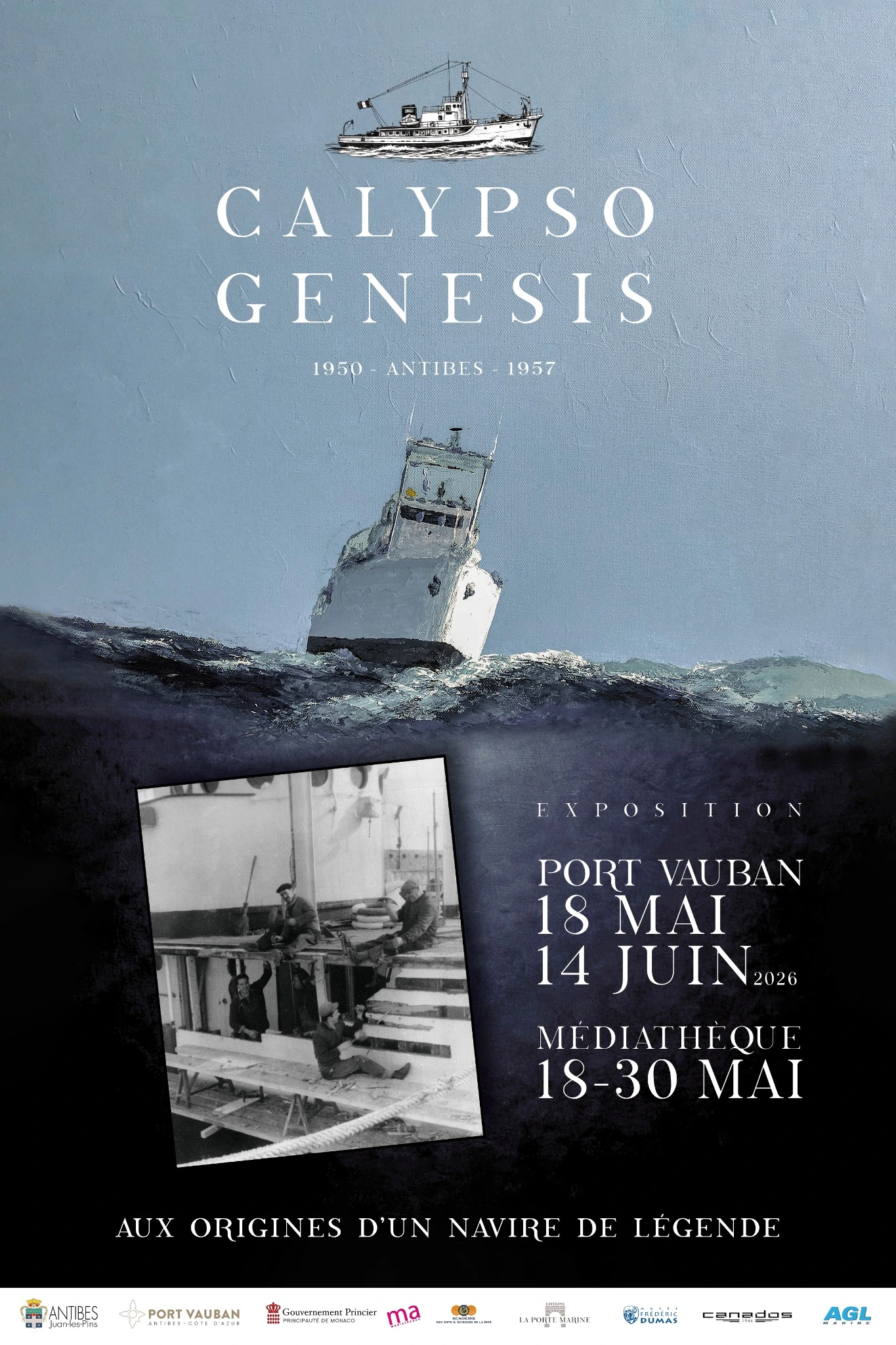
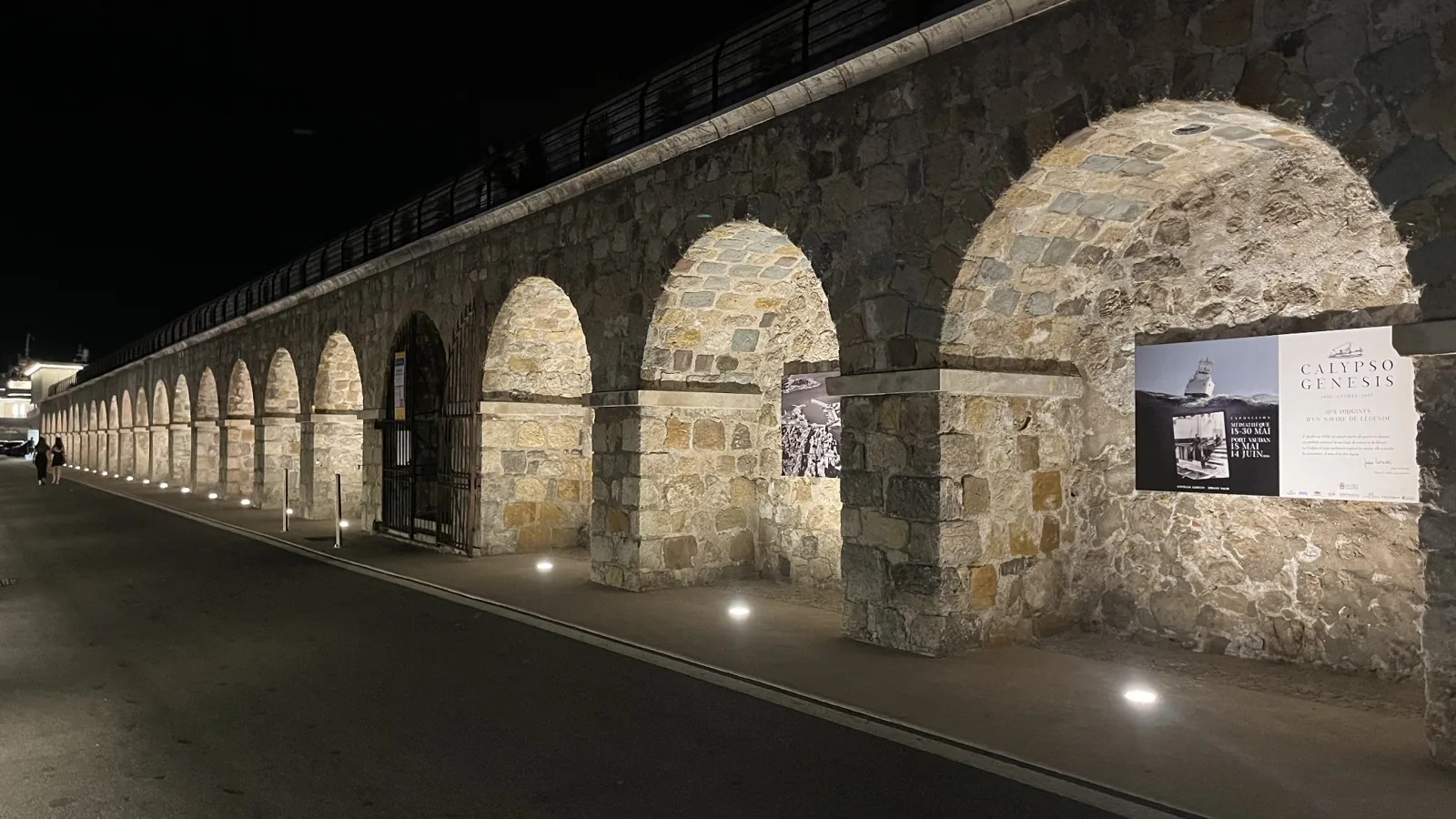
The large-format prints return to the quayside ramparts where the ship was transformed in 1951.
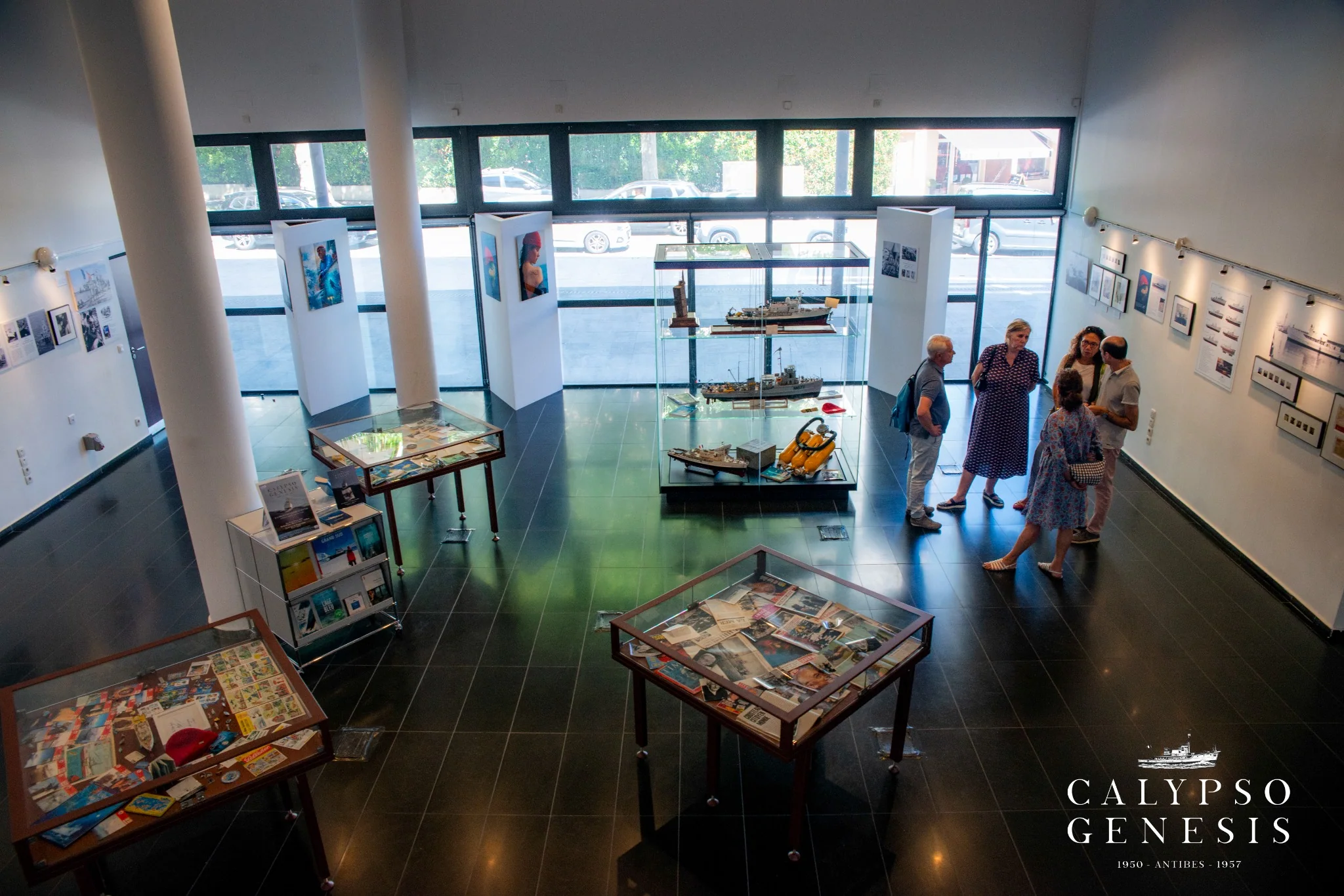
Period photographs, handwritten notebooks, documents, models and historical objects.
EXHIBITION ALBUM
04 / THE BOOK
A richly illustrated account of the history of Calypso, published in English and French.
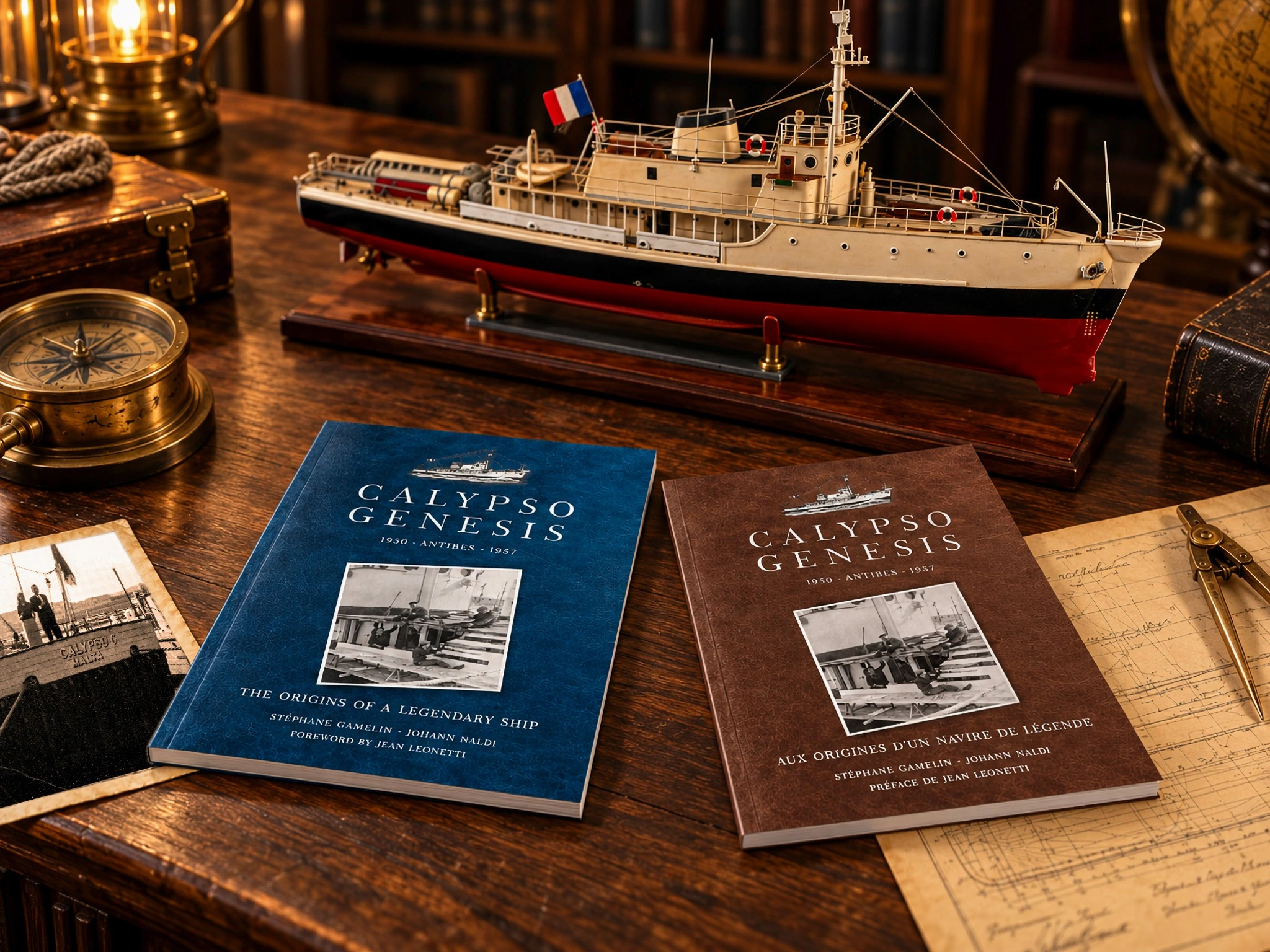
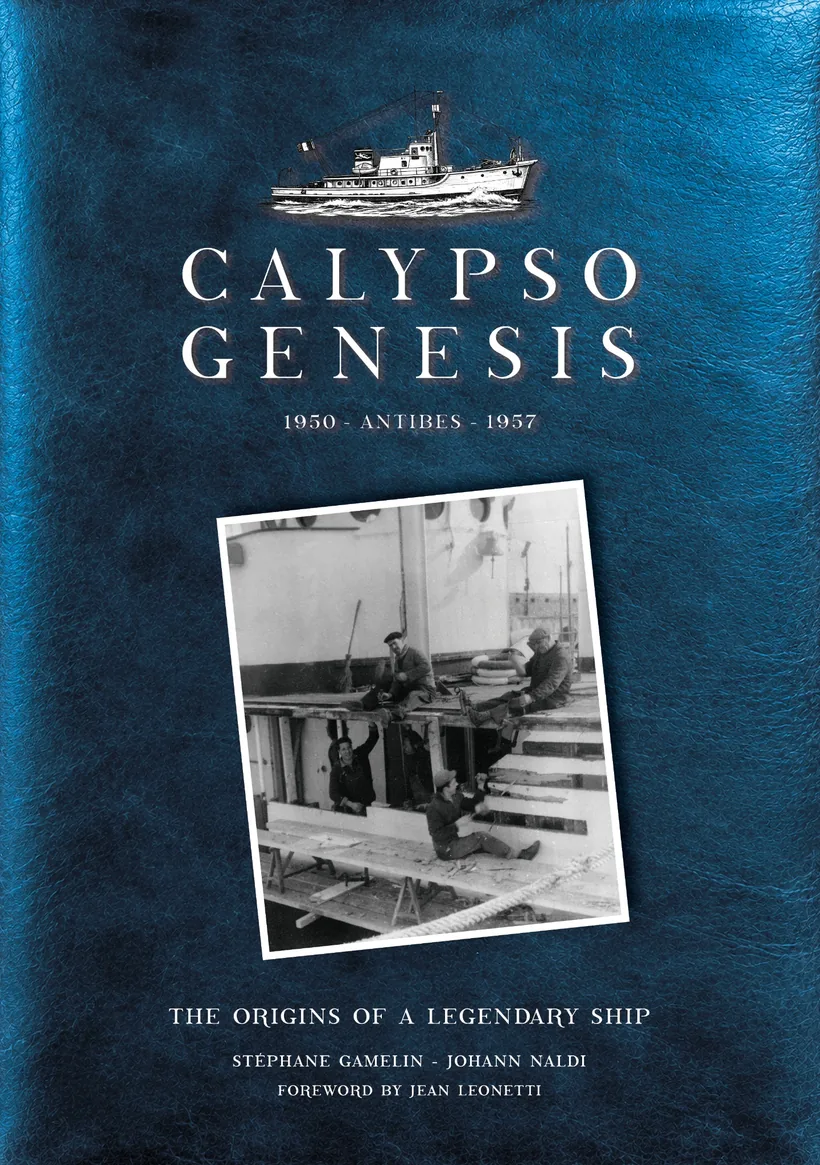
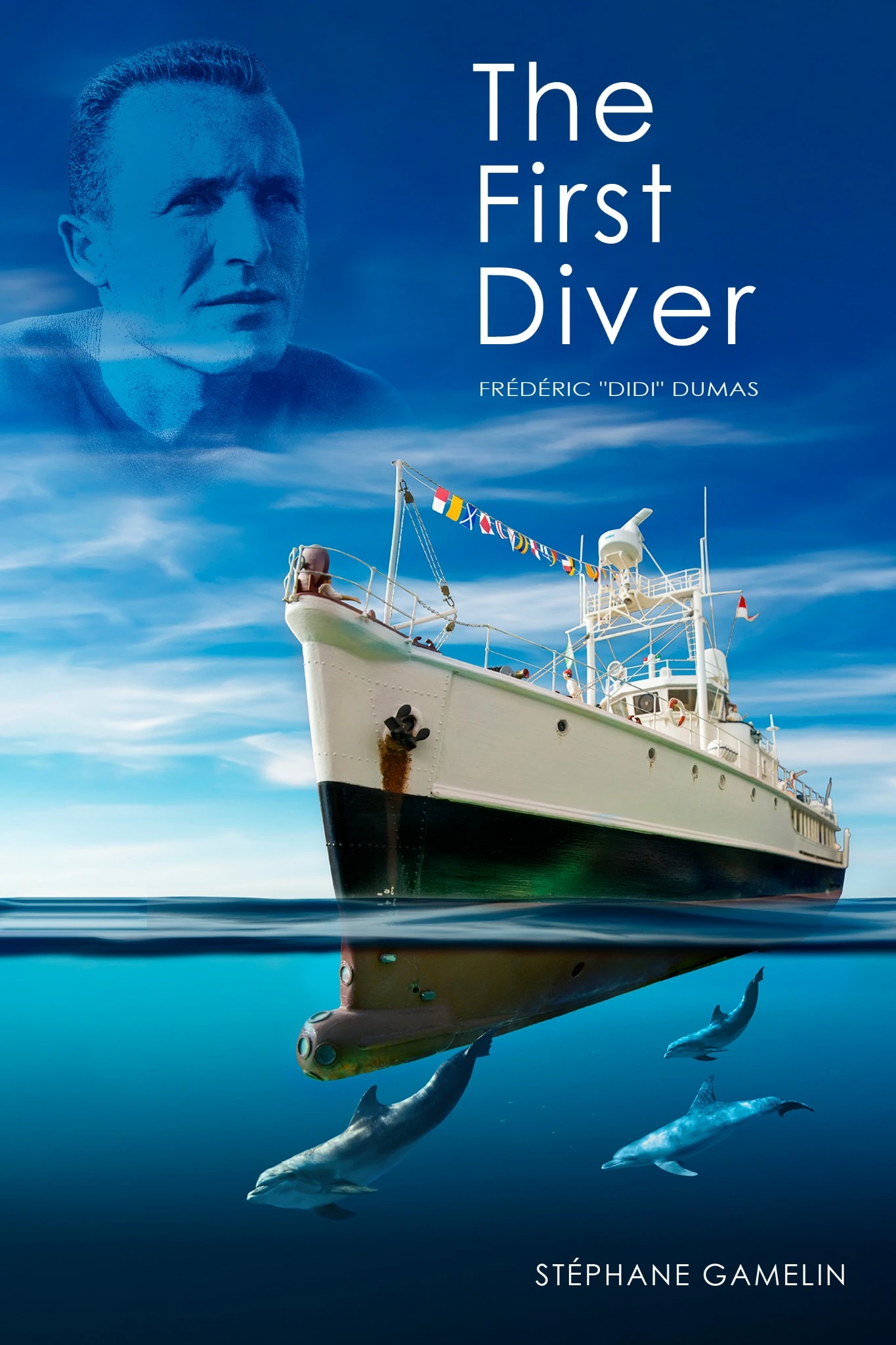
ENGLISH EDITION
The story of the Calypso’s formative years, presented for English-speaking readers through rare photographs and exceptional historical documents.
88 pages · 19 × 27 cm · paperback · premium color
Order on Amazon.com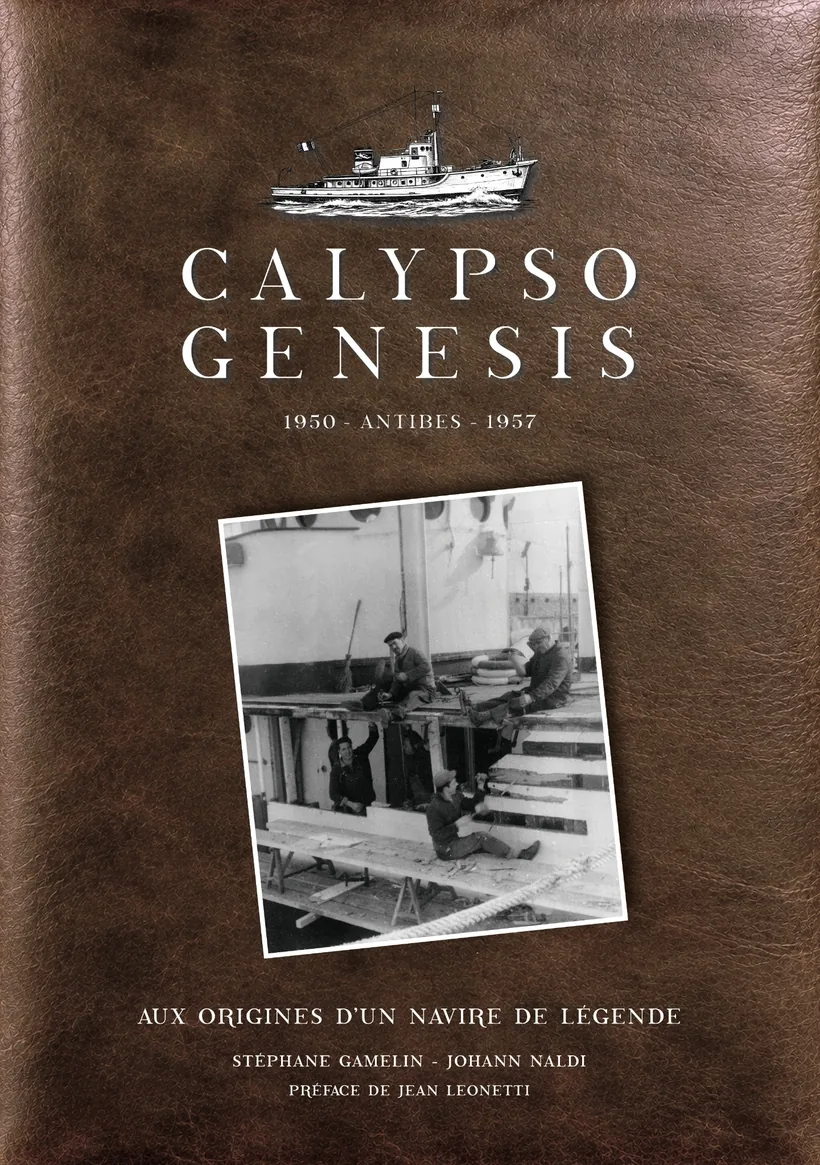
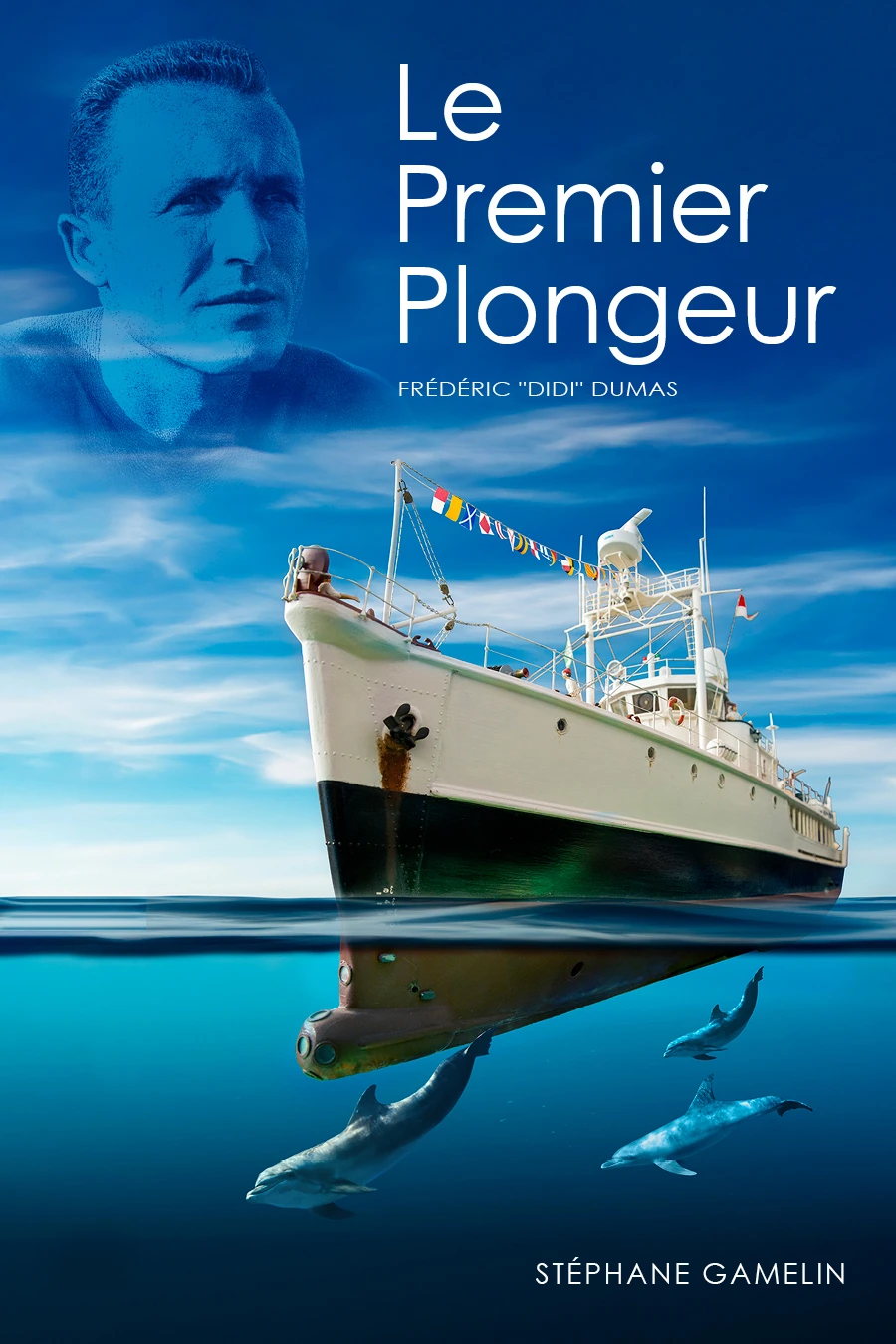
FRENCH EDITION
Discover the French original: rare photographs, Frédéric Dumas’s journals and the forgotten beginnings of the Calypso in Antibes.
88 pages · 19 × 27 cm · paperback · premium color
Order on Amazon.frPurchases and payments are processed by Amazon. Calypso Genesis does not sell books directly.
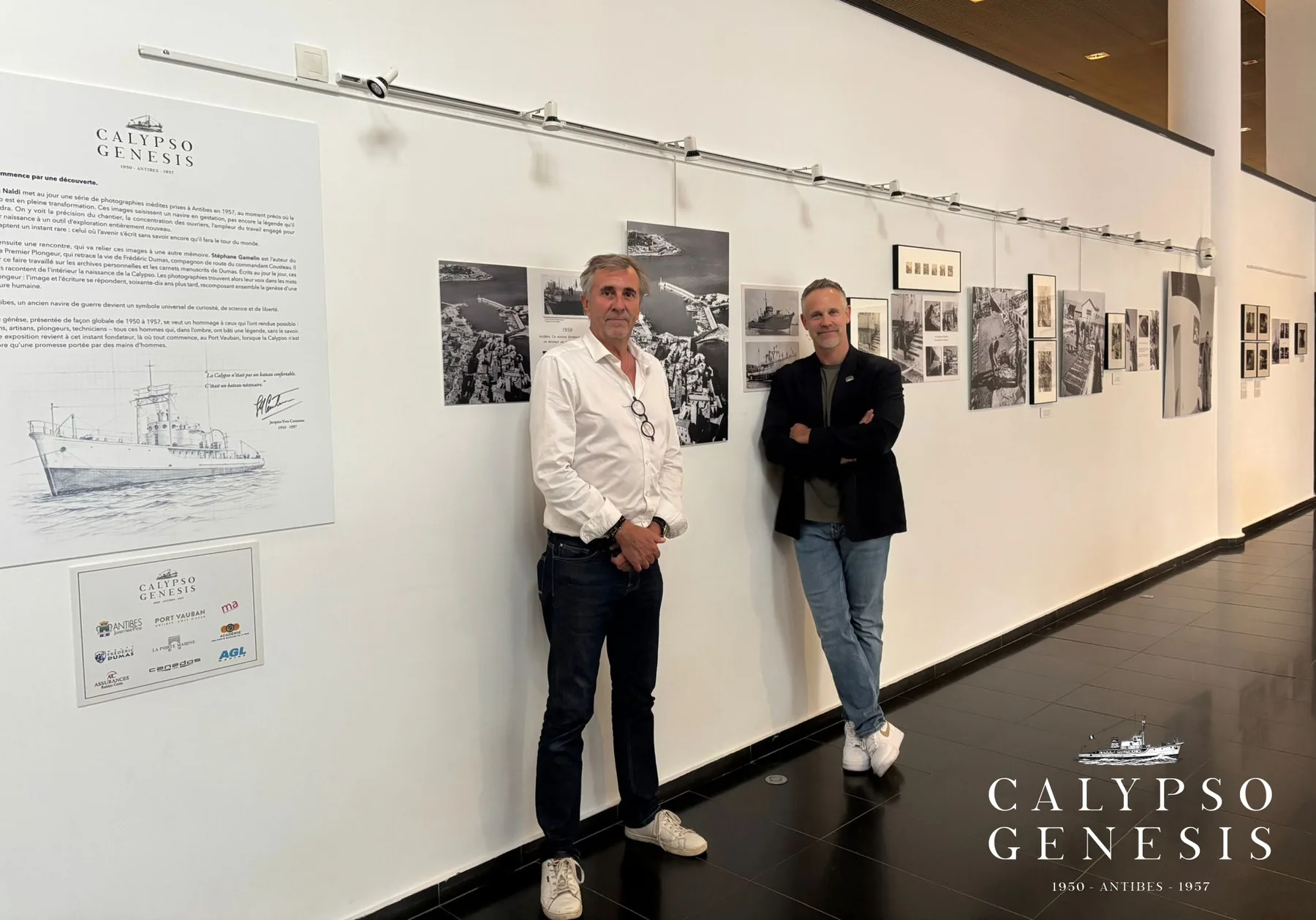
Stéphane Gamelin and Johann Naldi · Calypso Genesis exhibition, Antibes, 2026.
05 / THE CURATORS
The discovery of historic photographs met years of research into Frédéric Dumas’s archives, bringing this story back to life.
A photographer, graphic designer, author and publisher specializing in maritime subjects. Author of The First Diver, about Frédéric Dumas, he brought his research, the diver’s archives, visual direction and photographic experience to the project.
Stéphane Gamelin website ↗An art dealer, gallery owner and researcher known for rediscovering forgotten artworks. He uncovered the thirty-two historic Calypso photographs that inspired the project, combining archival investigation with an exceptional eye for discovery.
Johann Naldi website ↗06 / IN THE MEDIA
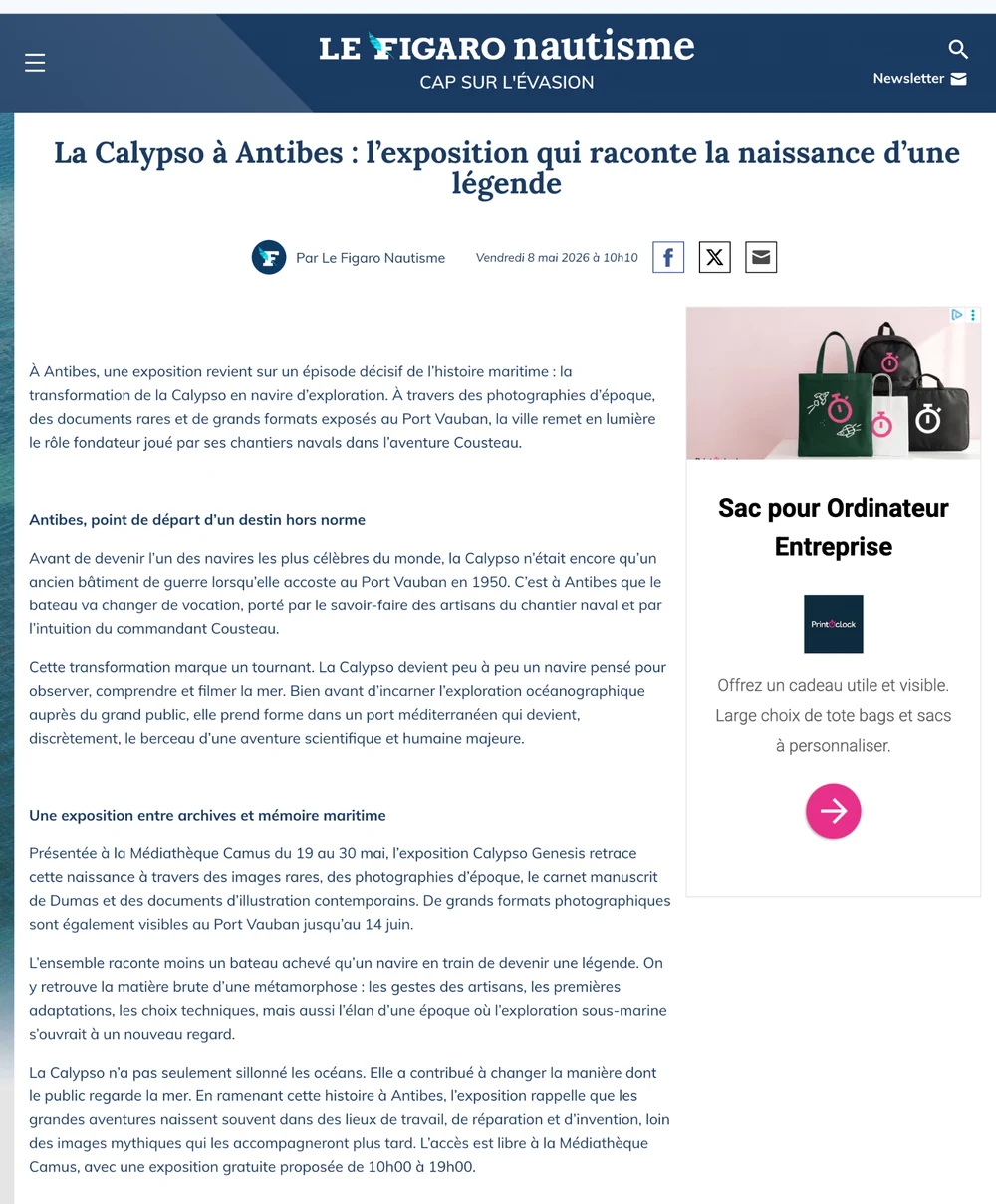
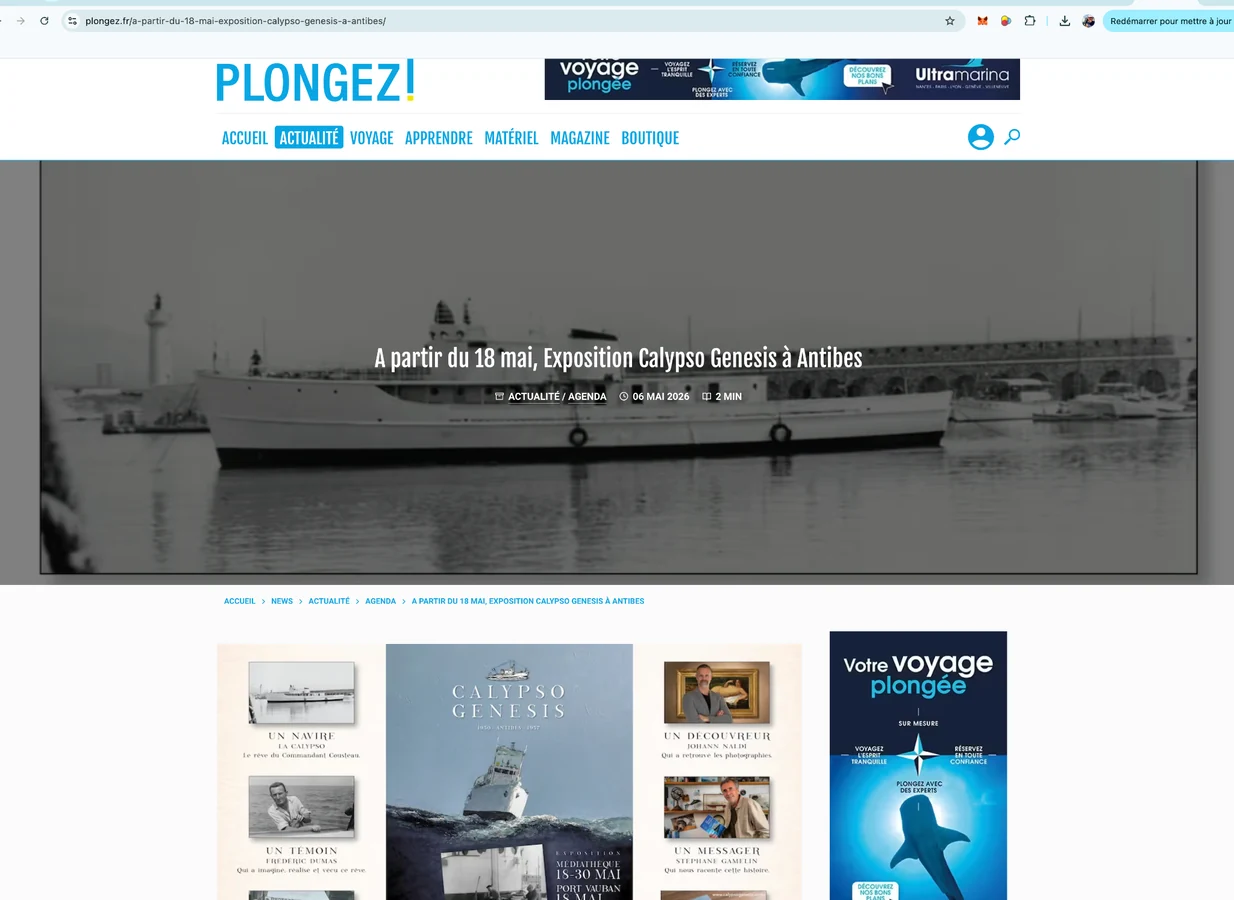
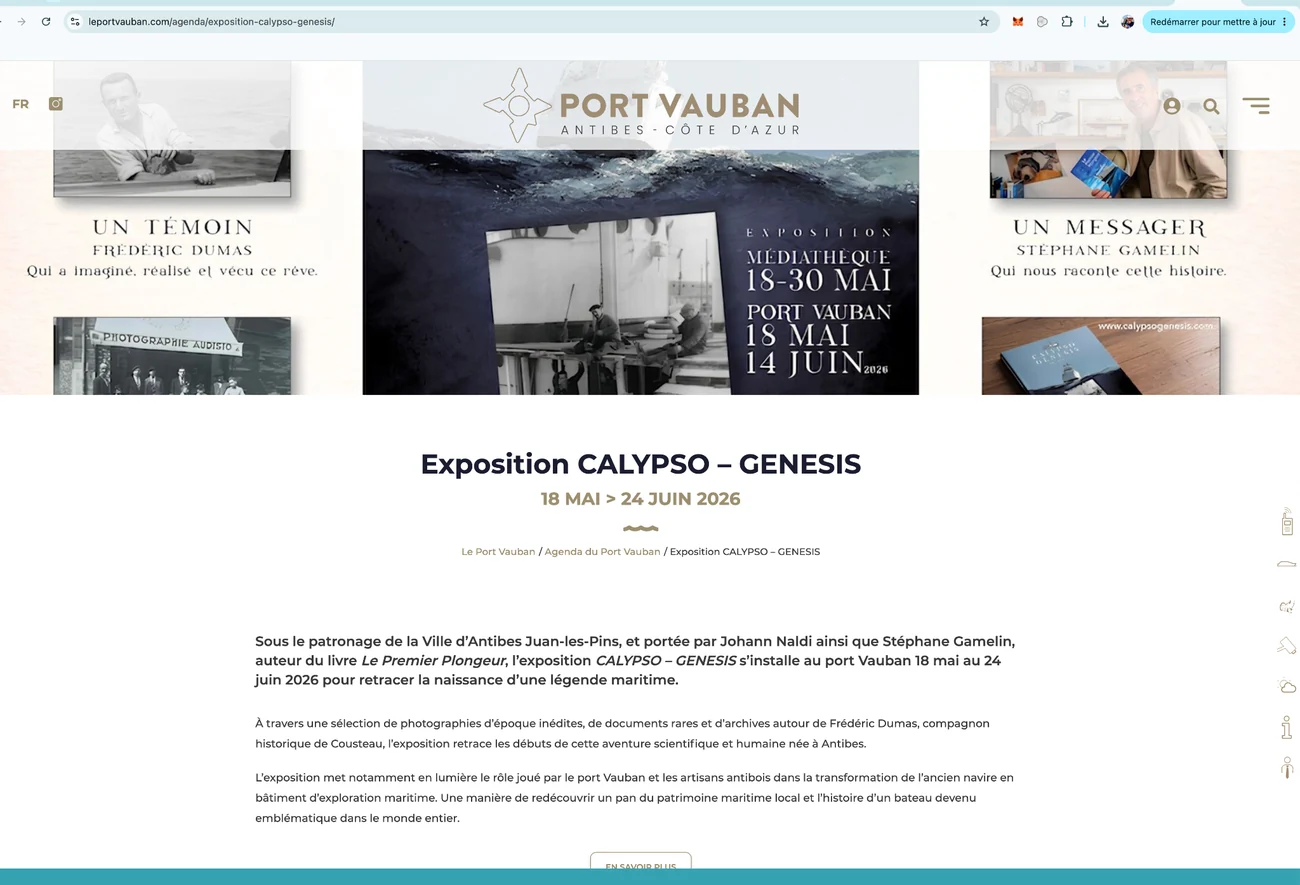
Articles, reports and coverage of the Calypso Genesis exhibition in Antibes.
Partners of the Antibes exhibition.
07 / CONTACT
Do you have a photograph or document related to the early history of the Calypso? Would you like to get in touch about the books or the exhibition? We would be pleased to hear from you.
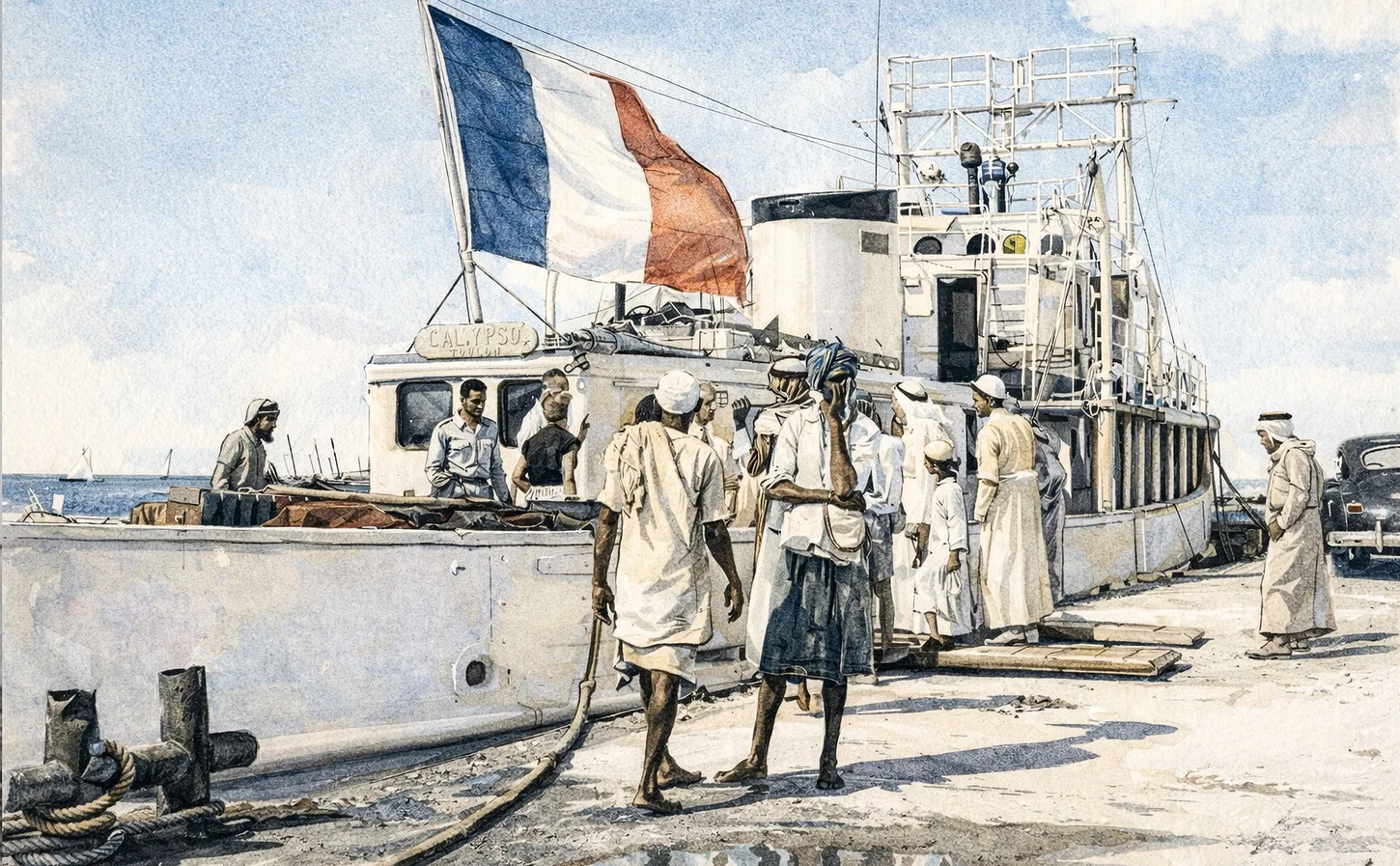
Call at Yemen